Gum disease treatment in Newark, before the bone goes
Gum disease is the leading cause of adult tooth loss in this country, and it is painless until it is advanced. The early stage reverses completely. The later stage does not, which is the whole reason to act now.

The early stage is fully reversible
Gingivitis responds to professional cleaning and better technique at home, usually within a fortnight. Nothing is lost permanently at this stage.
Your gums are measured, not glanced at
Pocket depths around each tooth are recorded, so changes between visits are picked up rather than guessed at.
Three hygienists, so you are seen promptly
Gum treatment usually means a course of appointments. Having three hygienists means you are not waiting months between them.
A therapist focused on periodontal health
Hayley Corden qualified in dental hygiene and therapy in 2024 and her role centres on stabilising and maintaining periodontal health.
It matters before any other treatment
Implants, veneers and crowns all fail on unhealthy gums, which is why gum treatment comes before cosmetic work here.
Most people who ask us about gum disease have noticed bleeding when they brush and put it down to brushing too hard. It is the most common early sign, and easy to dismiss because it does not hurt.
Caught early, gum disease can often be reversed, and later it can be kept stable. This page covers the signs, the treatment and the cost.

The disease that takes your teeth without ever hurting
Almost everyone expects a serious dental problem to announce itself. Decay aches. An abscess swells. Gum disease does neither. It bleeds a bit when you brush, which most people have been told is normal, and then it quietly destroys the bone holding your teeth in, over years, with no pain at all.
By the time a tooth feels loose, a significant amount of bone has already gone and it does not come back. That is the brutal arithmetic of it, and it is why we take bleeding gums seriously at London Road Dental Practice rather than mentioning them in passing on the way out.
Caught early, it reverses completely
Gingivitis, the first stage, is inflammation with no bone loss. Professional cleaning and a change in technique at home clears it, usually within two weeks, with nothing lost.
Caught later, it can still be stopped
Periodontitis cannot be reversed, but it can absolutely be halted. Plenty of our patients have stable gums for the rest of their lives after treatment. Stopping it is the realistic goal.
It protects everything else in your mouth
Fillings, crowns, bridges, implants and veneers all sit in gum. Work that fails usually fails because the foundation was neglected, not because the dentistry was poor.
The bleeding stops, and so does the smell
Persistent bad breath is usually bacteria below the gum line rather than anything you have eaten. Treating the gums deals with the cause rather than masking it.

Bleeding when you brush or floss
Red, puffy or tender gums
Persistent bad breath or a bad taste
Gums that have receded
A tooth that feels loose or has moved
Gaps appearing between teeth
Do I have gum disease?
Most adults have some degree of it at some point, and most do not know. The signs are easy to dismiss individually, which is exactly the problem. Any one of the points beside this is worth an appointment.
The only way to know how far it has gone is to have your gums measured. Your dentist or hygienist records the depth of the space between gum and tooth around each tooth, and takes x-rays where needed to see the bone level. That turns a vague worry into a number you can track.
Why treat gum disease here in Newark?
Gum treatment is a course of appointments rather than a single fix, so the practice you choose matters for continuity more than almost any other treatment.


3 people who treat your gums
Your dentist assesses and diagnoses gum disease, and our hygienists carry out most of the treatment.
Hayley Corden
Dental hygienist and therapistTrained in Dental Hygiene and Therapy at Portsmouth University after fifteen years as a dental nurse, graduating in 2024 and winning the BADT outstanding student achievement award. Her role focuses on supporting patients to stabilise and maintain their periodontal health, and her gentle approach and clear communication are what patients mention most.

Harriet Surtees
HygienistOne of our hygienists. Harriet also provides facial aesthetic treatments at the practice.
Jayne Skinner
HygienistOne of our hygienists, looking after your gums and keeping your mouth healthy between check-ups.
Measured, treated, then kept stable for good
We built this as a course rather than a one-off clean, because gum disease is managed rather than cured. The aim is to get you stable and then keep you there with as few appointments as your mouth actually needs.

Assessment and measurements
Your gums are measured around every tooth and the results recorded. X-rays show the bone level where needed. This gives us a starting point and tells you exactly which stage you are at.
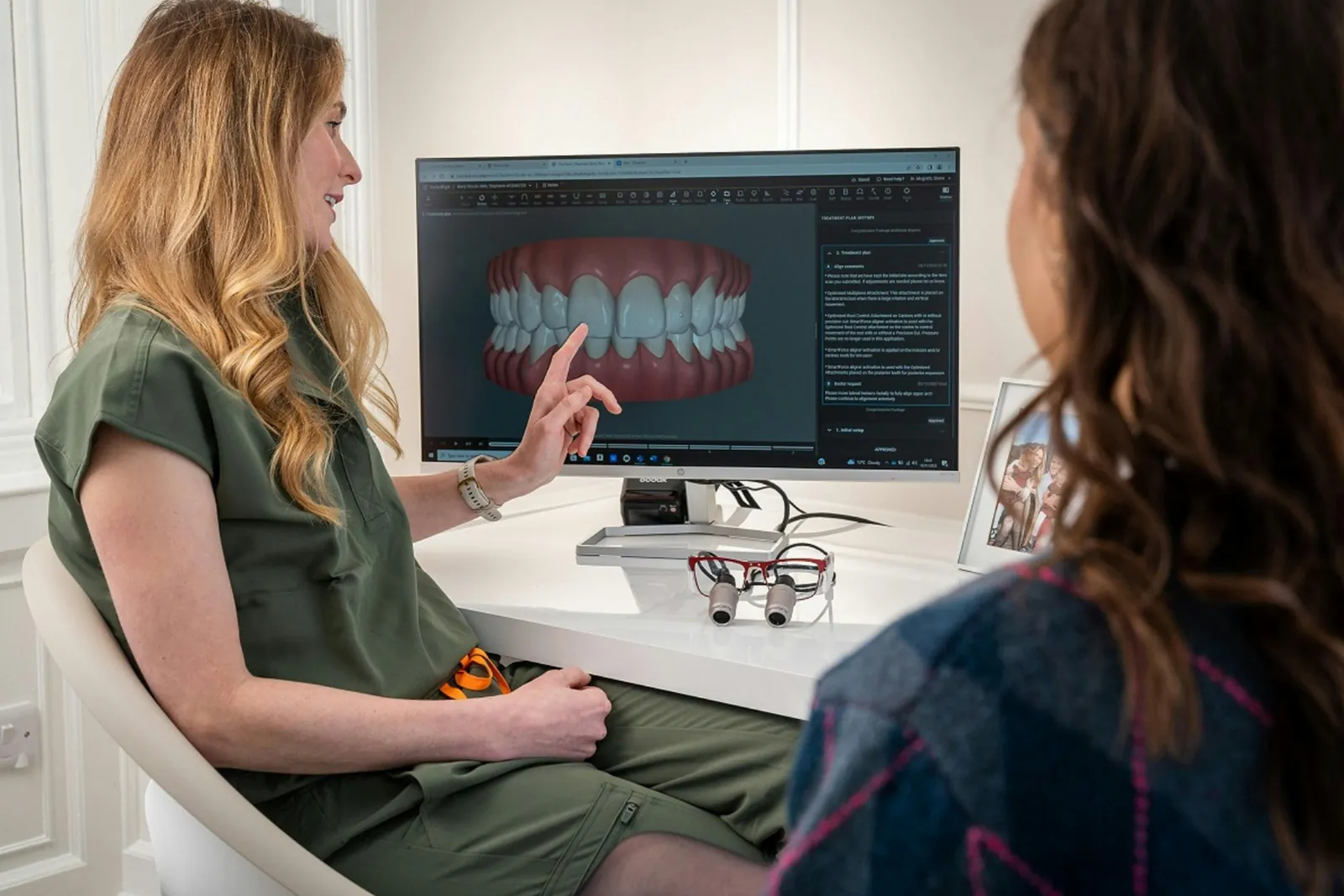
The diagnosis, explained properly
You will be shown your own numbers and told what they mean, whether the condition is reversible, and what the realistic outcome is. Guesswork and vague reassurance help nobody at this stage.
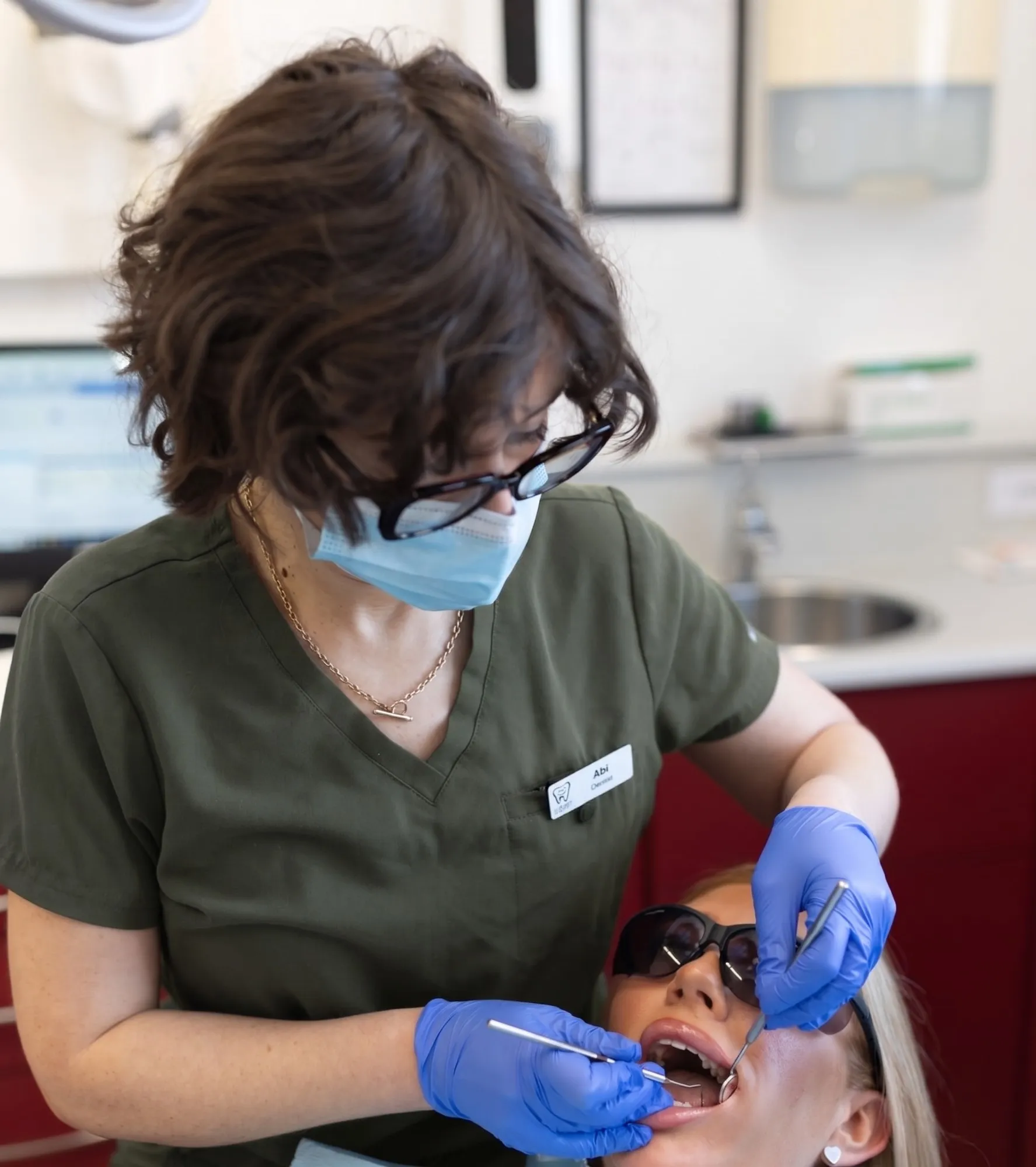
Cleaning below the gum line
Deposits are removed from the root surfaces below the gum, which is where the damage happens and where brushing cannot reach. Depending on how advanced it is, this may take several appointments.

Changing what happens at home
This is the half of the treatment that decides the outcome. Which areas you are missing, interdental brushes sized to your gaps, and technique. Professional cleaning without this does not hold.
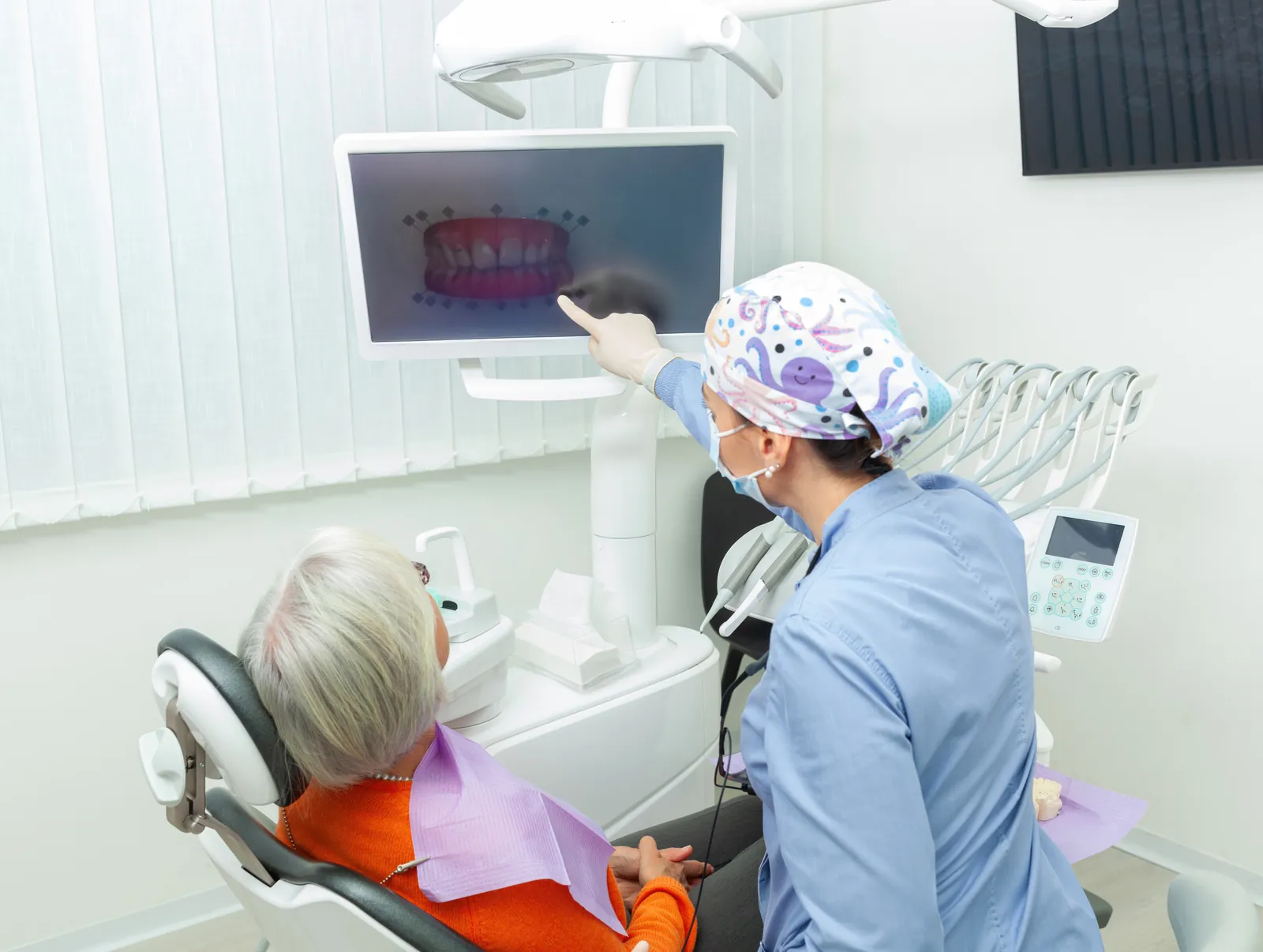
Re-measuring, to see if it worked
Your gums are measured again after treatment and compared with the first set of numbers. Improvement is visible on paper, and anywhere that has not responded gets further attention.

Keeping it stable
Once stable, you move onto a maintenance interval suited to your risk, which for people with a history of gum disease is usually more frequent than standard. This is the part that stops it coming back.

How much does gum disease treatment cost in Newark?
Periodontal treatment at London Road Dental Practice is £185, and how many appointments you need depends on how advanced the condition is. You will be given the full course and cost after your assessment rather than appointment by appointment.
- Periodontal treatment £185
- Hygiene appointments £72, air polisher plus £20
- Practice plans include hygiene from £13.12 monthly
- Treatment can be spread across appointments

Gingivitis or periodontitis?
These two words get used interchangeably and they should not be. The difference between them is whether anything has been permanently lost.
| Gingivitis | Periodontitis | |
|---|---|---|
| What it is | Inflammation of the gum only | Inflammation plus bone loss |
| Reversible | Yes, completely | No, but it can be stopped |
| Pain | Usually none | Usually none until late |
| Bleeding | Common | Common |
| Loose teeth | No | Possible, as it advances |
| Gum recession | Not usually | Common |
| Treatment | Cleaning and better technique | A course of treatment, then maintenance |
| Outcome | Back to healthy | Stable, with what is lost staying lost |

What raises your risk
Gum disease is not simply a matter of brushing badly, and treating it as a personal failing stops people seeking help. Several of these have nothing to do with effort.
- Smoking. The single biggest modifiable risk factor. It also masks the bleeding, so the disease advances further before anyone notices.
- Diabetes. The relationship runs both ways. Poorly controlled diabetes worsens gum disease, and gum disease makes blood sugar harder to control.
- Genetics. Some people are considerably more susceptible than others with identical habits. It is not fair, but knowing it changes how often you should be seen.
- Pregnancy and hormonal change. Hormonal shifts make gums more reactive. Pregnancy gingivitis is common and worth managing rather than waiting out.
- Some medications. A number of common drugs cause dry mouth or gum overgrowth, both of which raise risk. Tell us what you take.
- Stress. Affects immune response and tends to come packaged with worse habits. Worth mentioning if things have been difficult.

What our patients say about their gum treatment
Gum treatment is not glamorous and people rarely plan for it. The reviews tend to be about being told the truth kindly.

Gum disease questions we get asked in Newark
Gingivitis, the early stage, can be cured completely with professional cleaning and better cleaning at home. Periodontitis cannot, because the bone that has been lost does not grow back, but it can be stopped and kept stable indefinitely. That distinction is why early treatment matters so much.
No, and it is the most common mistake people make. Bleeding means that area is inflamed and needs cleaning more thoroughly, not avoiding. In most cases, cleaning it properly stops the bleeding within one to two weeks. If it does not, it needs looking at.
There is well-established evidence linking gum disease with diabetes in particular, where the relationship runs in both directions. Associations have also been reported with heart disease and other conditions. Your dentist can talk through what is relevant to your own medical history.
Not necessarily, and most people who get treated do not. Tooth loss happens when the condition goes untreated for years. Once it is diagnosed, measured and treated, the large majority of patients keep their teeth and stay stable long term.
Cleaning below the gum line on inflamed gums can be uncomfortable, and local anaesthetic is available if you need it. Say so rather than enduring it, because the appointment goes better for everyone when you are comfortable.
Receded gum does not regrow, and nor does lost bone. What treatment does is stop further loss and resolve the inflammation, which often makes the gums look and feel considerably better even though the recession itself remains.
More often than someone without a history of it, at least while things settle. Many patients with treated gum disease move to a three or four month hygiene interval rather than the standard six. Your own interval is set by your measurements, not a rule.
Yes. London Road Dental Practice is on London Road in Newark-on-Trent, around ten minutes from Fernwood and fifteen from Southwell, with free parking on site. We treat gum disease patients from across the area including Balderton, Coddington, Winthorpe, Collingham, Farndon and Sutton-on-Trent.
Get your gums measured, and find out where you stand
Bleeding gums are worth an appointment even if nothing hurts, particularly if nothing hurts. The earlier this is caught, the more of it is reversible.
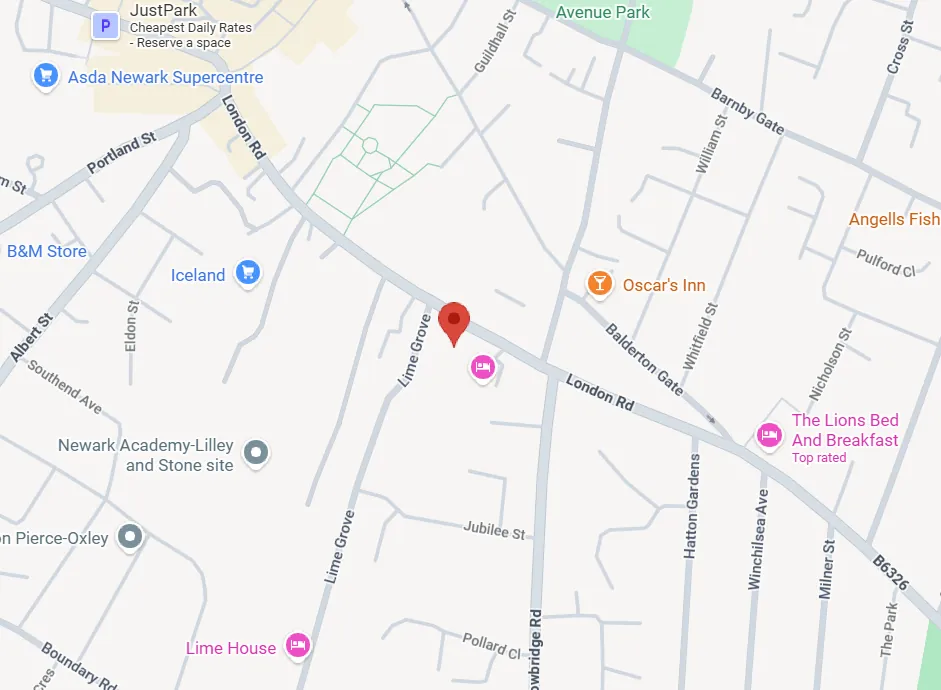
Find us on London Road.
36 London Road
Newark-on-Trent
Nottinghamshire NG24 1TF 01636 702241
Five minutes' walk from the town centre, close to the A1 and A46. Free on-site parking, plus pay and display at Deane Court Hotel (50p an hour, coins). Newark Castle and Newark Northgate stations are both under ten minutes away. Wheelchair accessible with downstairs surgeries and WC.