
Fillings in Newark, white or amalgam, your choice
We offer both tooth-coloured composite and traditional amalgam, and we will talk you through which suits the tooth rather than deciding for you. Most people choose white, and for front teeth it is the only sensible option.

Both materials available
Composite and amalgam are both offered here. Which is right depends on the tooth, the size of the cavity and what you want.
White fillings matched to your tooth
Composite is shaded to your own enamel, so a repaired tooth does not announce itself every time you laugh.
Old amalgam can be replaced
Old amalgam can be replaced when there is a reason to, such as decay underneath or a filling that is breaking down. We will be straightforward about the trade-off before you decide.
Caught early, it stays a filling
Decay found at a check-up is a filling. The same decay in two years is often a root canal and a crown.
IV sedation available in-house
If a filling is the thing you have been putting off, sedation is available and your own dentist still treats you.
Most people who ask us about a filling have noticed something small. A rough edge, a twinge with cold drinks, or a dark spot they hope is nothing.
Treating a small cavity early is quicker and kinder to the tooth. Below we explain when you need a filling, what it is made of and what it costs.

The least interesting treatment in dentistry, and the most important
Nobody looks forward to a filling and nobody tells their friends about one. But a filling is the treatment that stops everything else happening. Decay that is filled this year is a twenty-minute appointment. The same decay left alone becomes a dying nerve, then an infection, then a root canal and a crown, then eventually a gap.
That progression is the main reason we take check-ups seriously at London Road Dental Practice. Not because we enjoy finding things, but because the difference between a small filling and losing a tooth is almost entirely a question of when somebody looked.
It stops the decay spreading
Decay does not stop on its own and it does not heal. A filling removes what is damaged and seals the tooth so bacteria cannot carry on working their way inwards.
White fillings do not show
Composite is matched to the shade of your own tooth and bonded directly into place, so a repaired tooth looks like an undamaged one.
Less tooth is removed with composite
Because composite bonds to the tooth, it does not need an undercut shape to hold it in place the way amalgam does. That generally means keeping more of your own tooth.
It is usually one appointment
Most fillings are done in a single visit with nothing sent to a laboratory and nothing temporary in between. You walk in with a hole and out with a tooth.

Sensitivity to cold or sweet things
A visible hole or dark mark
Food catching in the same spot
A rough or broken edge
An old filling that has gone dark at the edges
Nothing at all
Do I need a filling?
Often you will have no idea, which is the awkward part. Decay does not hurt until it gets close to the nerve, and by then it is a bigger job. Most fillings we place are for decay the patient had no symptoms from at all.
That is why routine check-ups and x-rays matter. Decay starts between teeth and underneath existing fillings, where nothing is visible in a mirror and nothing aches. Two routine x-rays are included with a new patient examination here for exactly that reason.
Why have your fillings done here in Newark?
A filling is a filling almost anywhere. What differs is how much tooth is removed, how it is finished, and whether anybody takes the time over a back tooth nobody will see.


Who will do your filling
Fillings are carried out by your own dentist, and wherever possible you will see the same person each visit.
Dr Abigail Saunders
DentistBorn and raised in Newark-on-Trent, qualified at the University of Leeds in 2010 and with the practice since 2013. Enjoys all aspects of general dentistry and works at your pace to build you back to a stable, healthy mouth if things have been left.

Dr Marina Balazs
DentistQualified in 2014, with a particular interest in cosmetic and restorative dentistry. Holds a Certificate and a Diploma in Endodontics and particularly enjoys helping patients preserve and restore their natural teeth.

Dr Mehrver Butt
Dentist and sedationGraduated in 2017 with experience across general practice, hospital and community dentistry. Trained in sedation and works a great deal with nervous patients, which makes her the person to see if a filling is the thing you have been avoiding.

Sameet Hindocha
Principal dentistThe principal dentist, with the practice since 2021.

Nayra Noble
ImplantologistPlaces our Straumann implants, from single teeth to full implant dentures.

Dr Rabeeyah Cheema
DentistGraduated from Newcastle University in 2022 with a Postgraduate Certificate in Endodontics, and is working towards a Postgraduate Diploma in Restorative and Aesthetic Dentistry.

Keshlee Chandarana
DentistGeneral and family dentistry.

Sophie Norman
DentistSophie is the newest dentist to join the team at London Road Dental Practice.
In and out in one visit, with nothing left behind
We keep this as short as it reasonably can be, because the appointment nobody wants should not take longer than it has to. The one part we never rush is checking the bite at the end.
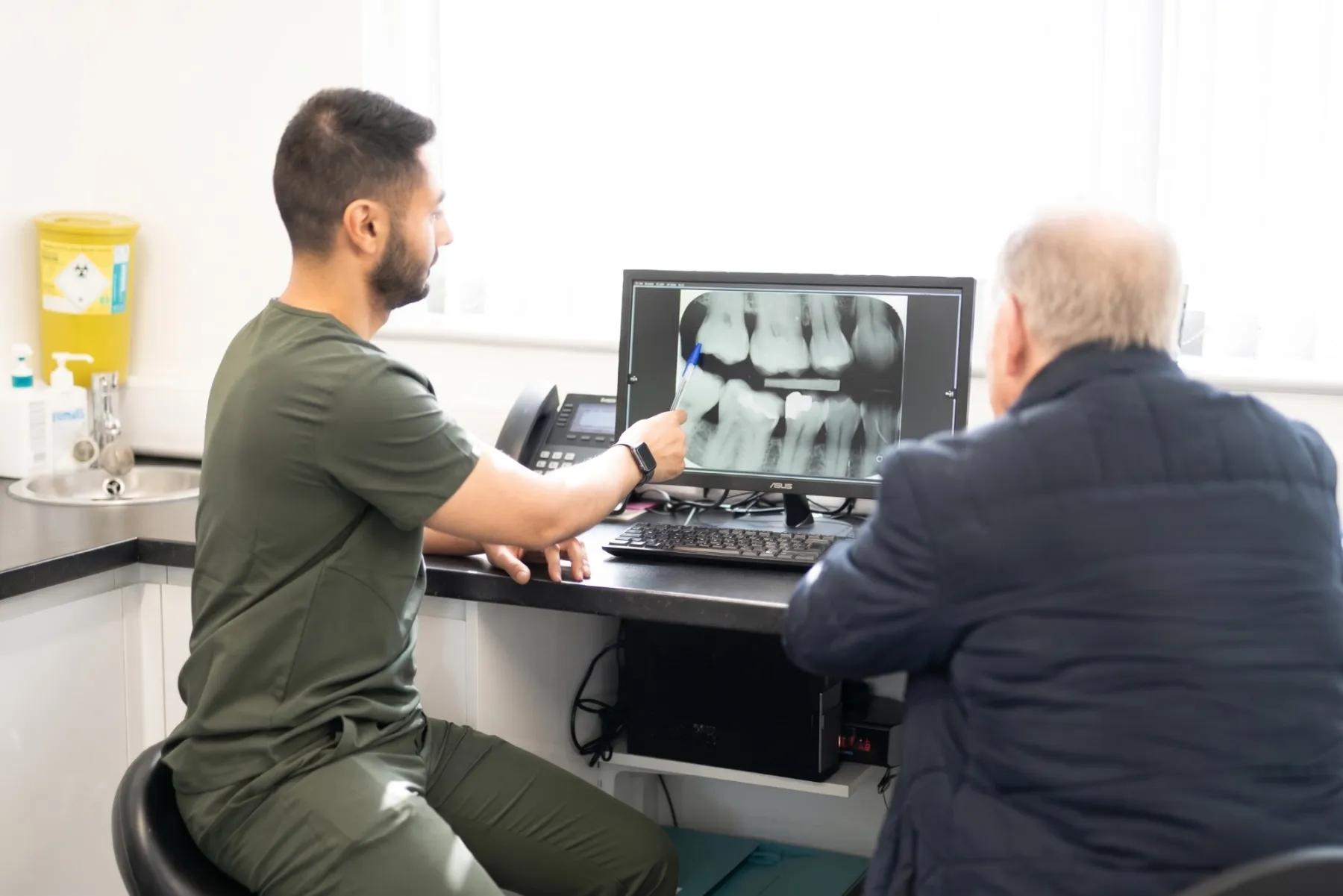
Finding it
Decay is identified at an examination, usually from an x-ray rather than by looking, because it typically starts between teeth or underneath an existing filling where nothing is visible.
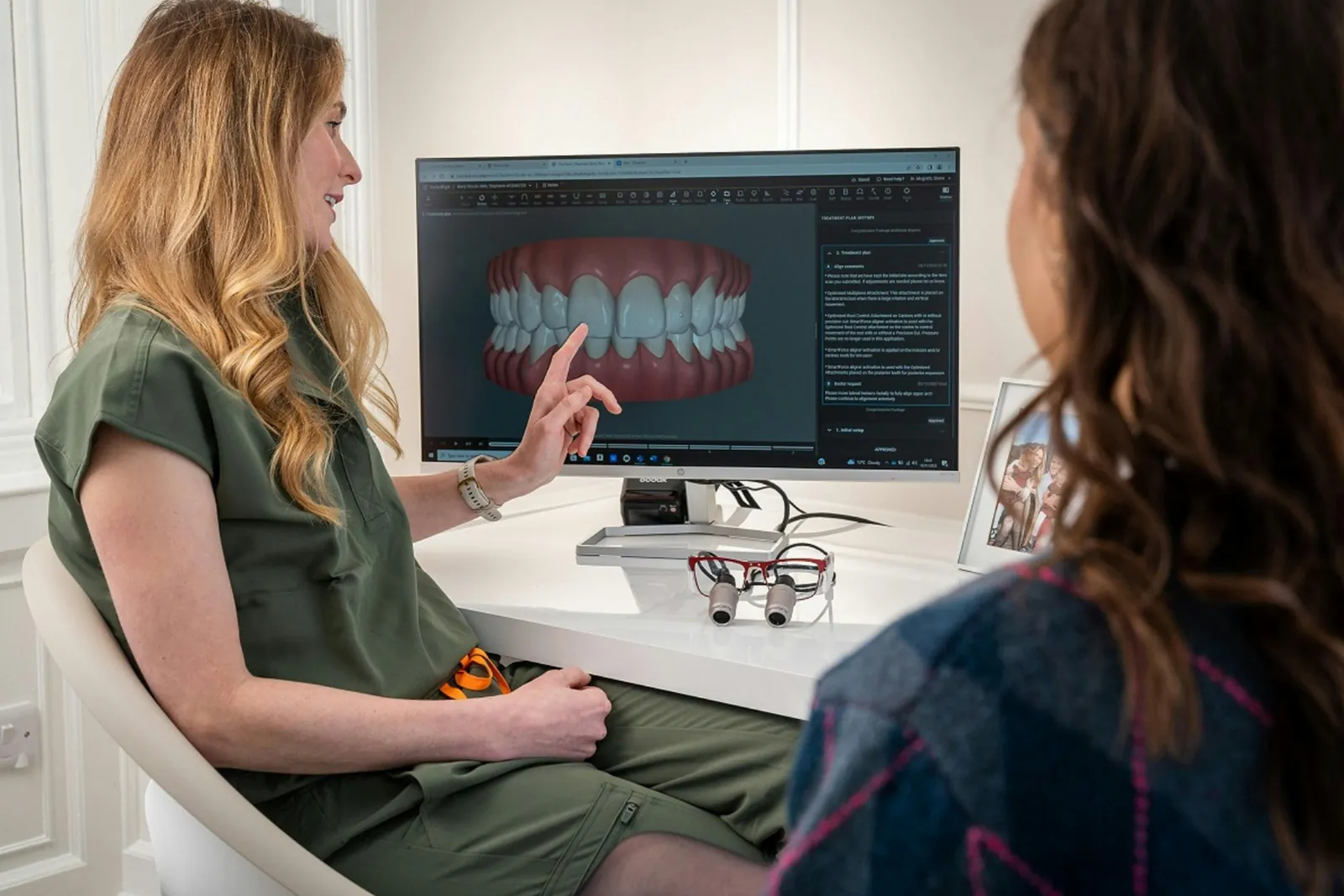
Choosing the material
We talk through composite or amalgam for that particular tooth, what each will cost and how long each is likely to last there. Front teeth are composite. Back teeth are a genuine choice.

Numbing the tooth
Local anaesthetic, and your dentist will check you are completely numb before starting rather than assuming. If you are nervous about the injection, say so, because there is a good deal that can be done about it.
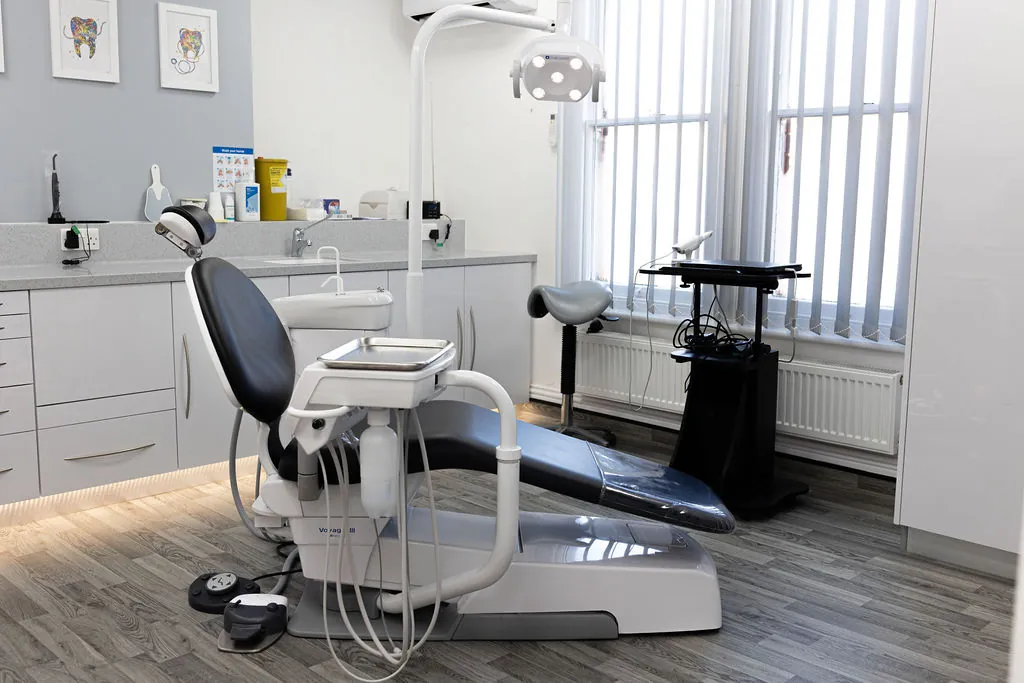
Removing the decay and placing the filling
The decayed tissue is removed and the tooth cleaned. Composite is placed in layers and set with a light; amalgam is packed and shaped. Either way the aim is to remove the decay and as little healthy tooth as possible.

Shaping, polishing and checking the bite
The filling is shaped to match the tooth and polished, then your bite is checked and adjusted. A filling left high is the most common reason a tooth aches afterwards, and it is entirely avoidable.

How much does a filling cost in Newark?
Amalgam fillings at London Road Dental Practice are £120 to £170 and composite fillings £150 to £280, depending on the size of the cavity. Practice plan members pay 15% less. You will always be told the cost before any treatment is carried out.
- Amalgam £120 to £170, composite £150 to £280
- Practice plan members get 15% off treatments
- Price depends on the size of the cavity
- You are told the price before we start
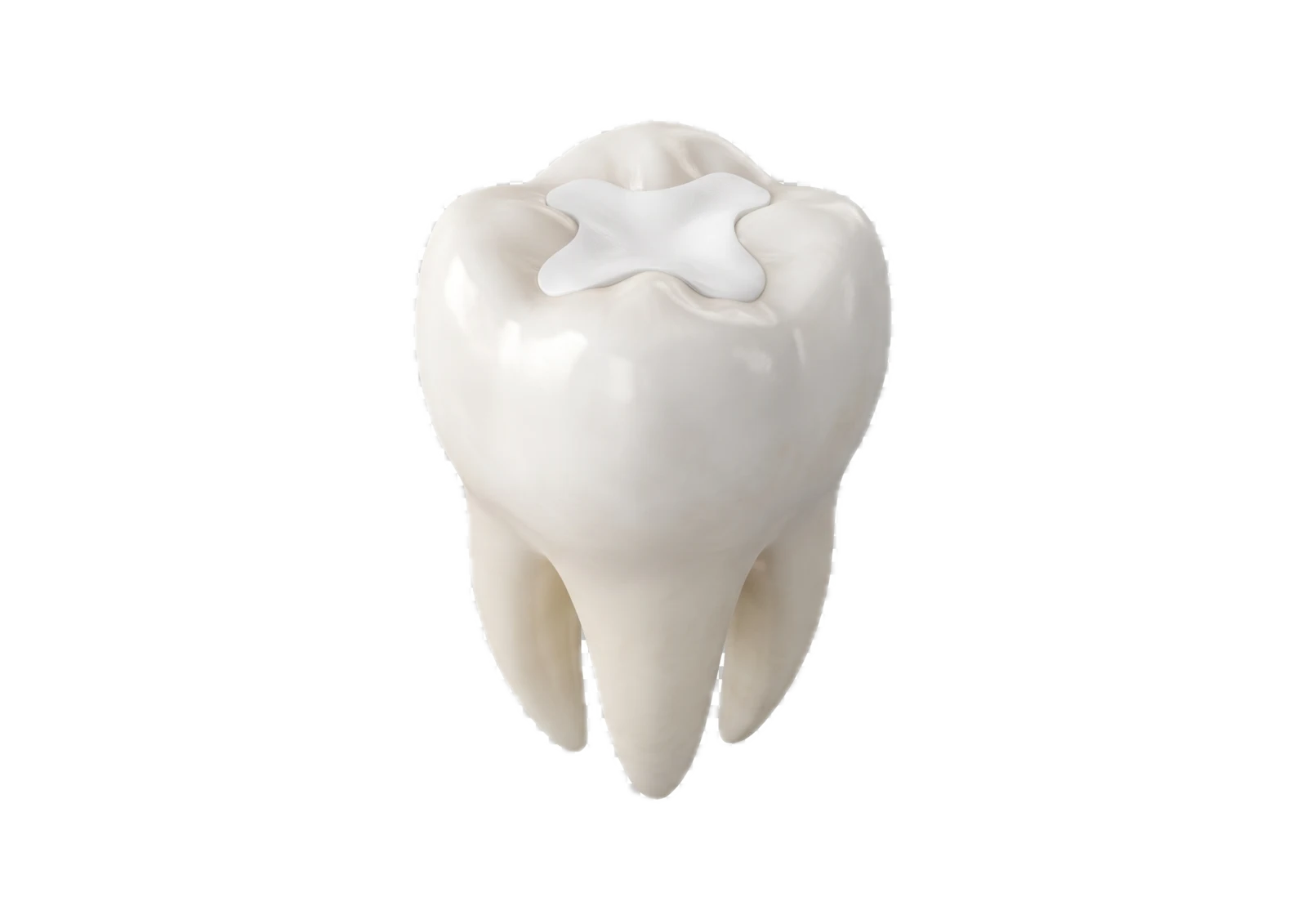
White fillings or amalgam?
Both are offered here and both have their place. This is the honest comparison rather than the one that pushes you towards the more expensive option.
| White composite | Amalgam | |
|---|---|---|
| Appearance | Matched to your tooth | Silver, clearly visible |
| Suitable for front teeth | Yes | No |
| Tooth removed | Less, because it bonds | More, to hold it in place |
| Strength in large back cavities | Good | Very good |
| Typical lifespan | Around 5 to 10 years | Often 10 to 15 years |
| Staining over time | Can stain at the edges | No |
| Done in one visit | Yes | Yes |
| Cost | Higher | Lower |

Why fillings fail, and how to get more years out of yours
No filling is permanent. They are a repair to a tooth that was damaged, and they live in a wet environment being chewed on several thousand times a day.
When a filling fails it is rarely the filling itself that has given up. It is usually new decay getting in at the margin where the filling meets the tooth, which is why the replacement is almost always bigger than the original.
- Decay at the edges. The most common reason. The margin is the weak point, which is why cleaning between teeth matters so much around filled teeth.
- Grinding. Night-time grinding puts enormous force through fillings. If you grind, a night guard protects the work and the tooth under it.
- A bite that was never adjusted. A filling sitting high stresses the tooth every time you close. This is checked before you leave here.
- Size. Very large fillings in back teeth take a lot of force. At a certain point an inlay, onlay or crown is the better answer and we will say so.
A filling that is replaced three or four times eventually leaves too little tooth to hold another one, which is how teeth end up needing crowns or root canal treatment. Catching decay early is what keeps the cycle short.

What our patients say
Nobody writes a review about a filling. They write one about the person who did it without making them feel awful.

Filling questions we get asked in Newark
The tooth is numbed with local anaesthetic first, so you should feel pressure and vibration rather than pain. The injection is the part most people mind, and there is a good deal that can be done to make it easier if you say so beforehand.
A white composite filling typically lasts around five to ten years and an amalgam often ten to fifteen, though both vary enormously with size, position and how well the tooth is cleaned. Fillings at the back doing heavy chewing have the hardest life.
Not unless there is a clinical reason, such as decay underneath, a crack, or the filling breaking down. Replacing sound amalgam purely for appearance means removing more tooth, and we will be straightforward with you about that trade-off before you decide.
Amalgam has been used for well over a century and remains approved for use in the UK, with restrictions in place for certain groups including children and pregnant women. If you have concerns, raise them at your appointment and your dentist will talk through what applies to you.
Some sensitivity for a few days is normal while the tooth settles, particularly after a deep filling. Aching that persists beyond a couple of weeks, or pain on biting, usually means the filling is sitting slightly high and needs a quick adjustment. Ring us rather than putting up with it.
With a white composite filling, yes, it is set hard before you leave. With amalgam it is usually best to avoid chewing hard on that side for the rest of the day. Either way, wait until the numbness has fully gone so you do not bite your cheek.
If decay has reached the nerve, a filling will not resolve it and the tooth usually needs root canal treatment. Two of our dentists hold postgraduate endodontic qualifications, so that is carried out here rather than referred elsewhere.
Yes. London Road Dental Practice is on London Road in Newark-on-Trent, around five minutes from Coddington and ten from Balderton, with free parking on site. We see patients from across the area including Fernwood, Winthorpe, Collingham, Farndon, Southwell and Sutton-on-Trent.
Get it filled while it is still just a filling
The gap between a small repair and a big one is measured in months. If something has been niggling, or it has simply been a while, book in and find out.
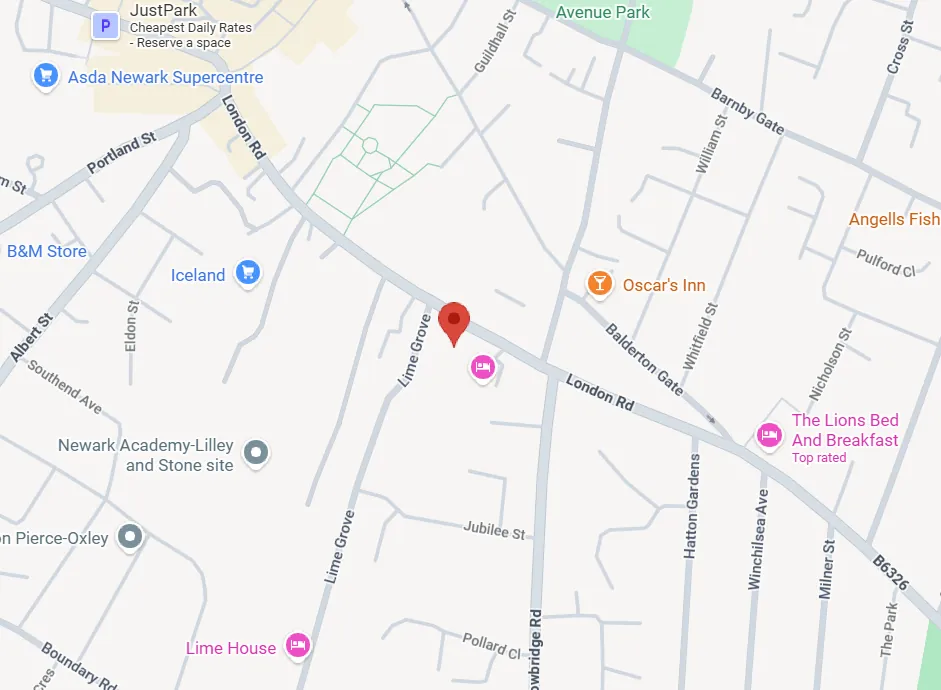
Find us on London Road.
36 London Road
Newark-on-Trent
Nottinghamshire NG24 1TF 01636 702241
Five minutes' walk from the town centre, close to the A1 and A46. Free on-site parking, plus pay and display at Deane Court Hotel (50p an hour, coins). Newark Castle and Newark Northgate stations are both under ten minutes away. Wheelchair accessible with downstairs surgeries and WC.