Veneers in Newark, only when nothing simpler will do
Veneers change a smile more completely than anything else we offer, and they are the one cosmetic treatment you cannot undo. So we plan them properly, and we will tell you first if bonding or whitening would get you there.

Planned with a mock-up before anything is cut
You see the proposed shape before a single tooth is prepared. Veneers are not a treatment to design on the day.
We will suggest something simpler if it would work
Plenty of people who ask about veneers need composite bonding or whitening instead, and we would rather say so.
Three dentists who carry out veneer work
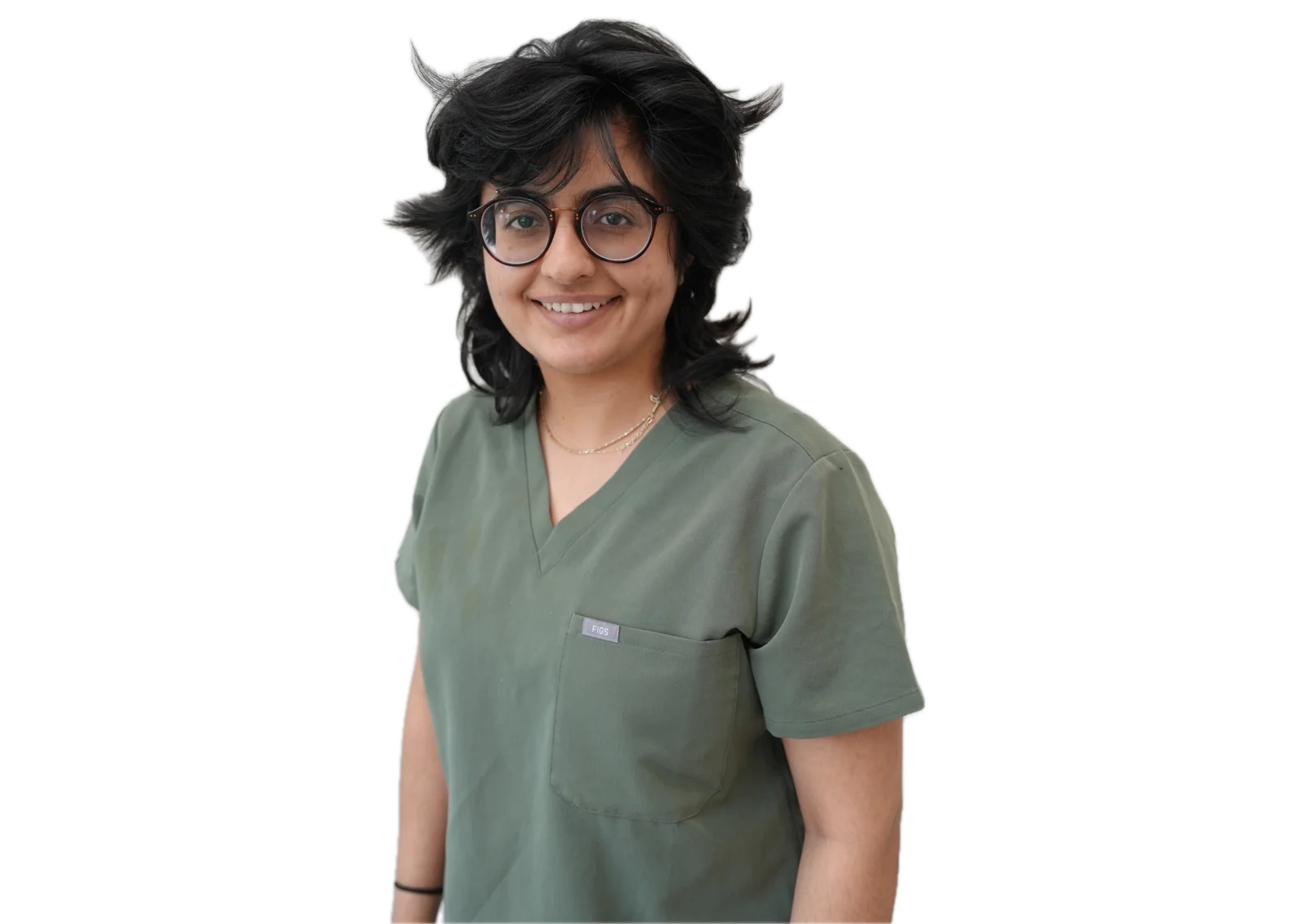
Dr Marina Balazs and Dr Rabeeyah Cheema both hold postgraduate certificates in restorative and aesthetic dentistry, and Dr Abigail Saunders carries out veneer and crown work alongside general dentistry.
Digitally scanned, not moulded
Our digital scanner captures the detail a veneer needs, with no impression putty.
Whitening first, always
Veneers do not change colour once made, so we whiten your natural teeth before the shade is matched.
Most people who ask us about veneers have already tried the smaller fixes. Perhaps whitening only went so far, or bonding on one tooth made its neighbours look different.
Veneers are thin shells fitted to the front of your teeth to change their shape, colour and length. This page explains who they suit, how treatment runs and what it involves, including the parts that cannot be undone.

When reshaping one tooth at a time stops being enough
Veneers come up when somebody has tried the smaller things, or when the problem is too big for them. Teeth that are badly worn, discoloured in a way whitening will not touch, uneven in shape across the whole front of the smile, or carrying old bonding that has been patched too many times.
A veneer is a thin shell bonded over the front of a tooth. It changes shape, colour and alignment in one go, which is why the results are the most complete of any cosmetic treatment. It is also why we take longer over the planning than almost anything else we do at London Road Dental Practice.
Shape, colour and alignment, all at once
No other single treatment does all three. A veneer can lengthen a short tooth, close a gap, cover discolouration and straighten the appearance of a slightly turned tooth in one piece.
Porcelain holds its colour
Unlike composite, porcelain does not pick up staining from coffee, tea or red wine. The shade you leave with is broadly the shade you keep.
Designed as a set, not tooth by tooth
Front teeth are judged as a group. Veneers let us plan proportion, symmetry and the line of the edges across the whole smile rather than improving one tooth at a time.
Strong, once bonded
A bonded porcelain veneer is considerably stronger than the thin shell it starts as. With care and a night guard where grinding is a factor, ten to fifteen years is a reasonable expectation.
Veneers before and after, on our own Newark patients
No stock photography and no manufacturer images. These are people treated here at London Road Dental Practice. Drag the handle to see the change.
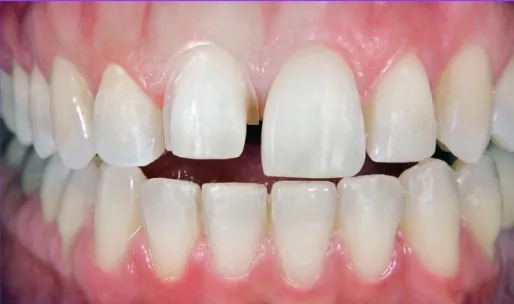
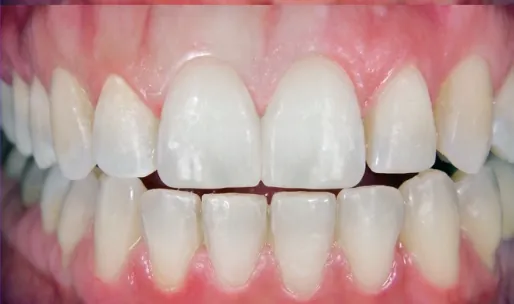 Before
After
Before
After

Teeth that are worn or chipped across the front
Discolouration that whitening cannot shift
Teeth that are uneven in size or shape
Gaps you do not want to close with braces
Old bonding or crowns that no longer match
A slightly turned tooth
Do I actually need veneers?
This is the question we ask first, and a fair number of people who come in asking about veneers leave having booked something else. That is not us turning work away. It is that veneers are irreversible, and we are not going to prepare healthy teeth for something a simpler treatment would have fixed.
If the colour is the problem, teeth whitening costs a fraction as much. If one or two teeth are chipped or short, composite bonding usually handles it in a single appointment and keeps your options open. If the teeth are in the wrong position, Invisalign moves them rather than disguising them. Veneers are the right answer when those things have been considered and are not enough.
Why have veneers done here in Newark?
Veneers are the treatment where the difference between a good practice and a quick one shows up most, and it shows up years later rather than on the day.

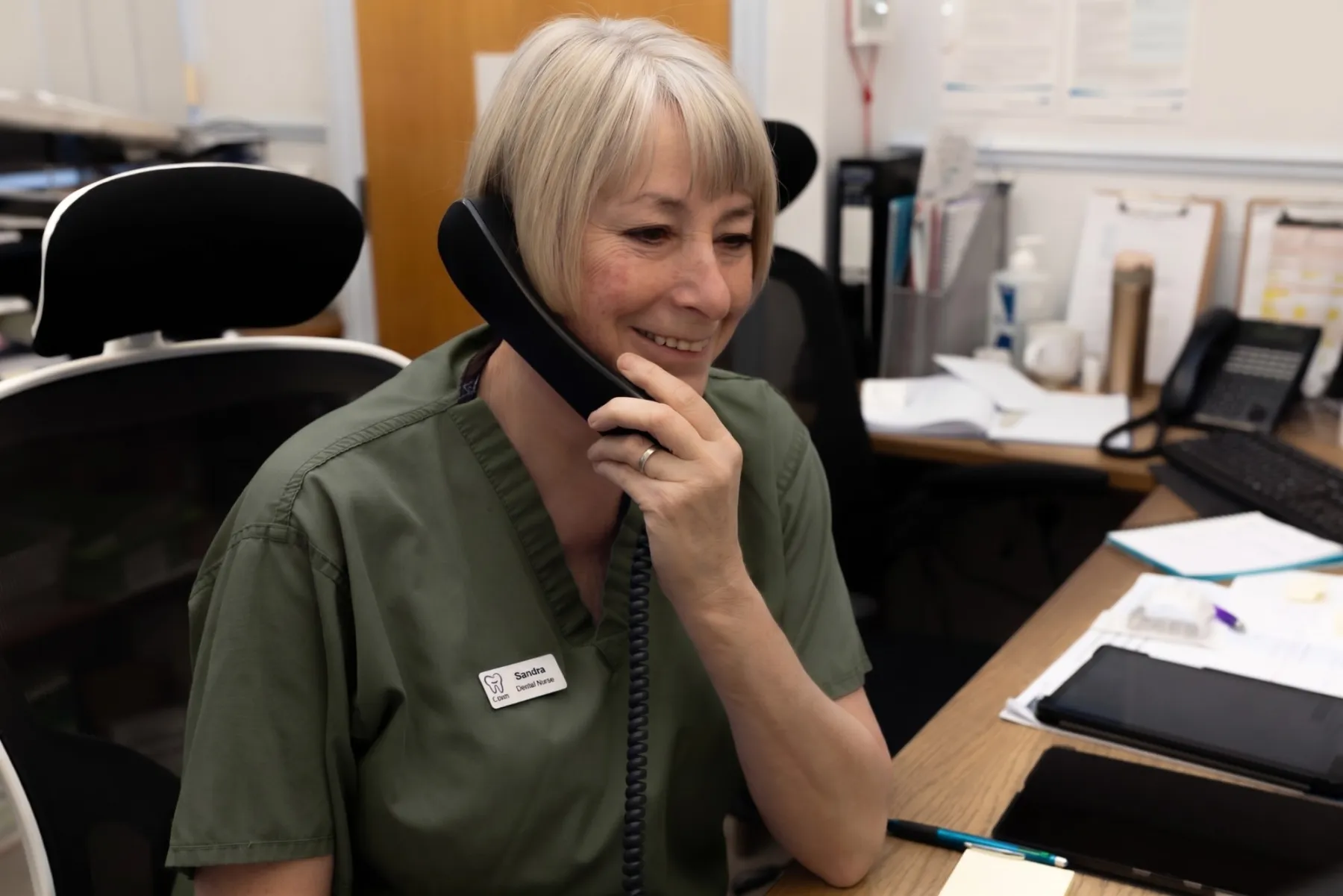
4 people on your veneer treatment
You see the same dentist through planning, preparation and fitting, which matters on a treatment judged entirely on detail.
Dr Marina Balazs
DentistQualified in 2014, with a particular interest in cosmetic and restorative dentistry. Holds a Certificate and a Diploma in Endodontics, and plans cosmetic cases combining straightening, whitening and bonded work.

Dr Rabeeyah Cheema
DentistGraduated from Newcastle University in 2022 with a Postgraduate Certificate in Endodontics, and is working towards a Postgraduate Diploma in Restorative and Aesthetic Dentistry. Smile makeovers are her main interest.
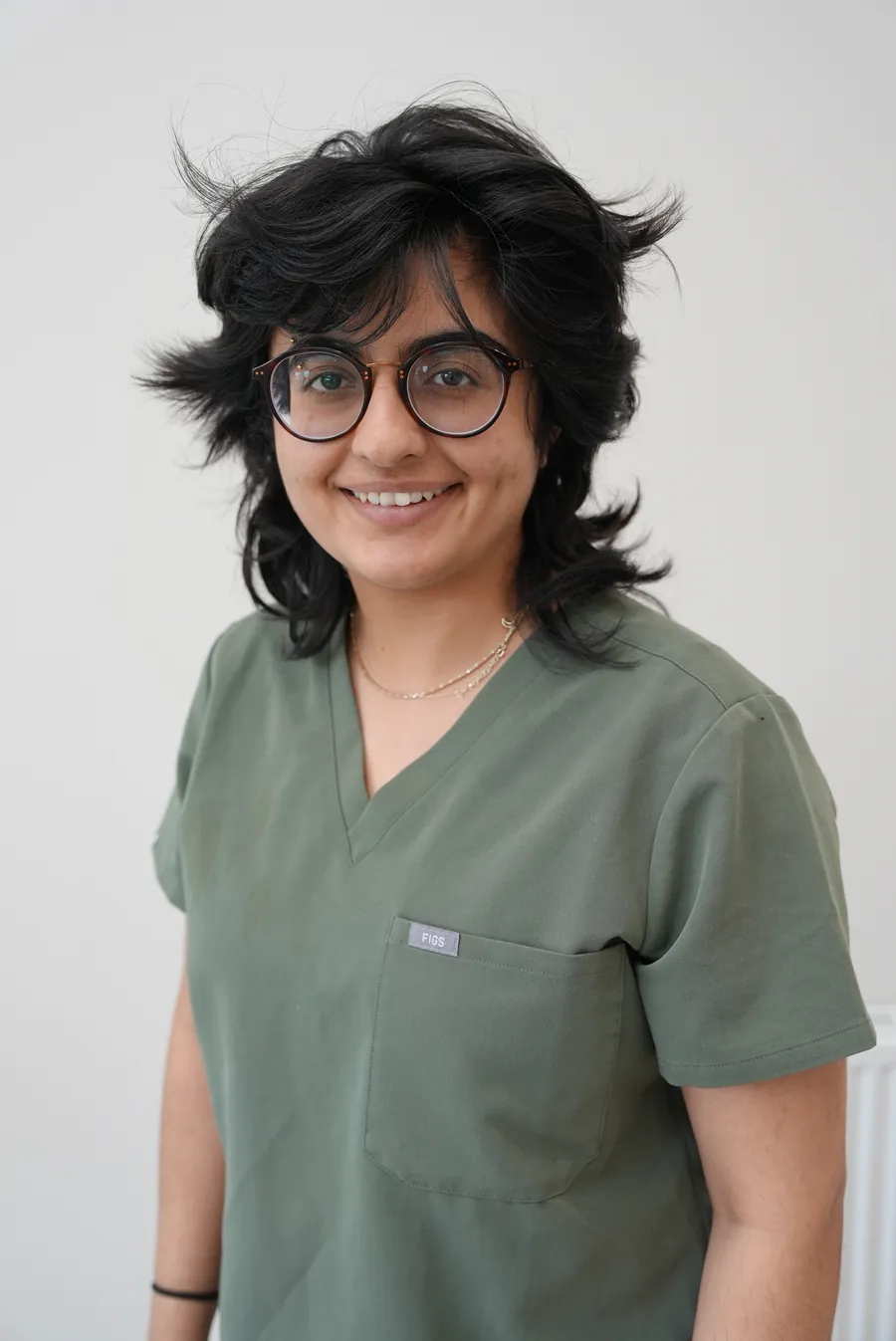
Dr Abigail Saunders
DentistQualified at the University of Leeds in 2010 and with the practice since 2013. Abi carries out veneer and crown work alongside general dentistry.

Alice Maxwell
Patient coordinatorNot a dentist, which most people find easier when the questions are about cost. Alice handles finance and timescales and is your point of contact from the first enquiry onwards.

Five stages, and you approve the shape before stage three
We built this order around the one thing you cannot take back. Nothing is prepared until you have seen the planned result and said yes to it.
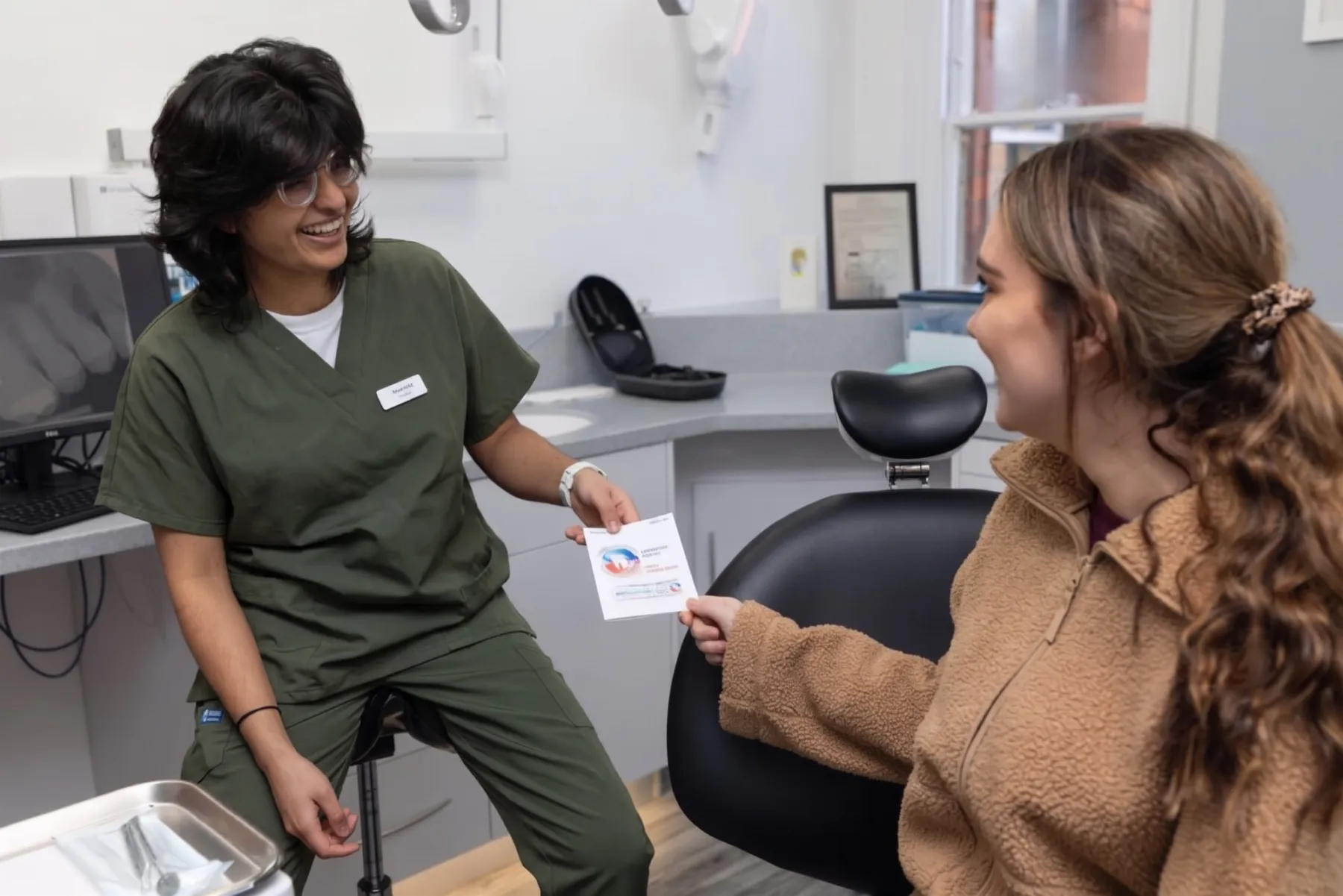
Your free consultation
We look at what is bothering you and talk honestly about whether veneers are the right treatment or whether something less invasive would do. If they are right, we talk through numbers, timescales and what the commitment actually involves.
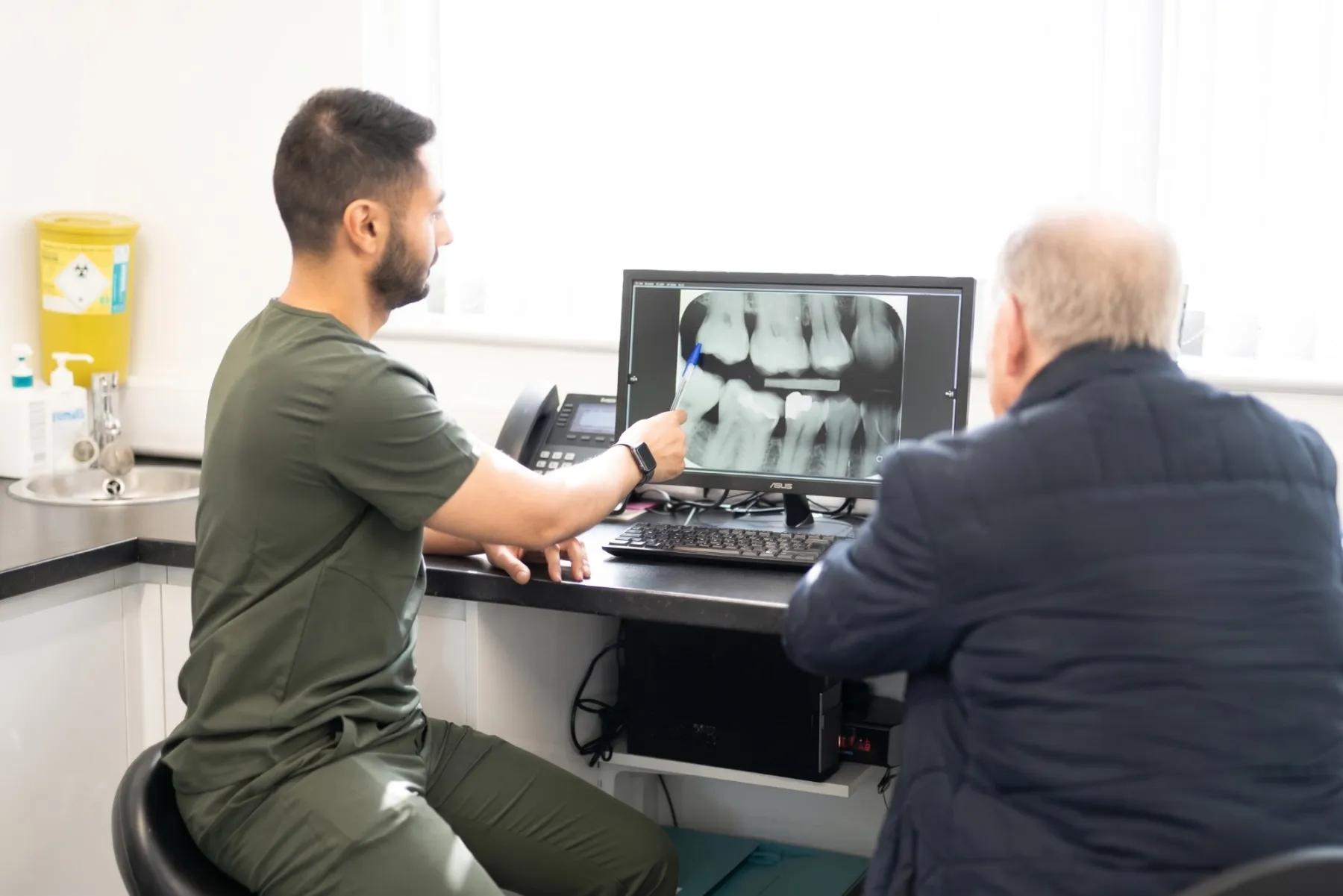
Scan, photographs and a mock-up
A digital scan and a set of clinical photographs, from which the proposed shape is planned. Whitening, if you are having it, happens at this stage so the shade is matched to your finished natural colour.

Seeing the plan, and approving it
You are shown the planned shape before anything is prepared. Proportion, length, the line of the edges. If it is not what you pictured, it changes now, when changing it costs nothing.
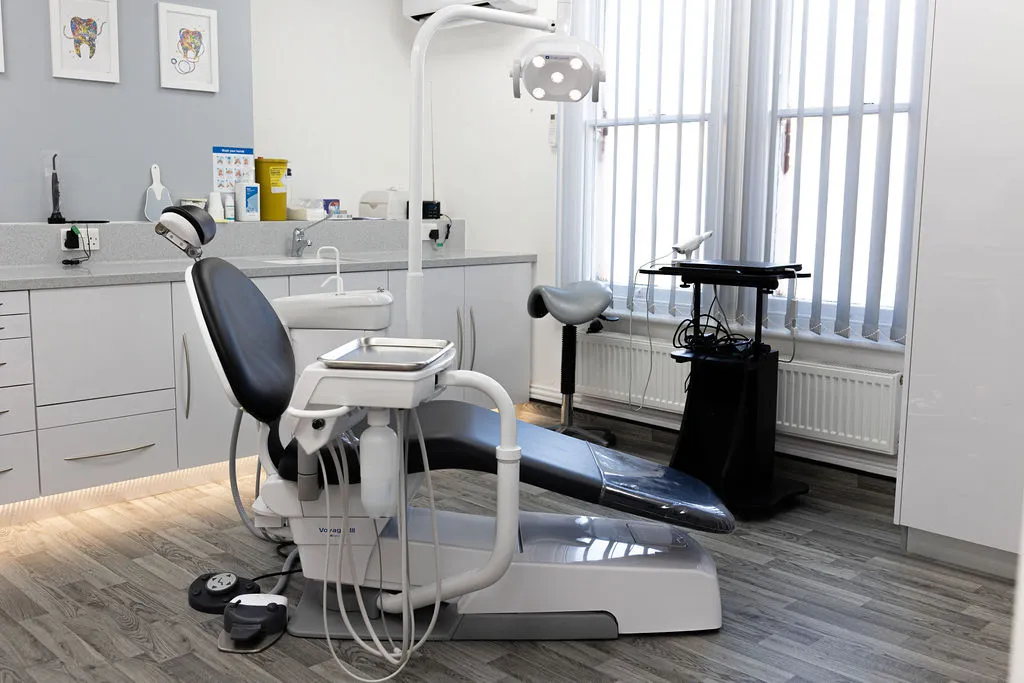
Preparation and temporaries
A thin layer of enamel is removed from the front of the teeth and a final scan taken. You leave wearing temporary veneers while the permanent ones are made, which also lets you live with the shape for a while.

Fitting, then a review
The veneers are bonded into place and the bite checked and adjusted. We see you again shortly afterwards to check how they feel, how the gums have settled and whether anything needs refining.

How much do veneers cost in Newark?
Veneers at London Road Dental Practice start from £750 per tooth, or £637.50 for practice plan members, and most people treat between six and ten across the front of the smile. Finance runs through Tabeo on treatment over £1,000 with no minimum deposit, and Alice can arrange it over the phone.
- From £750 per tooth, £637.50 for members
- Whitening first, from £450, so shades match
- Treatment can be staged to spread cost
- 0% finance over 12 months available
Veneers, composite bonding or crowns?
These three get compared constantly and they are not interchangeable. What separates them is how much tooth is removed and how much change you need.
| Composite bonding | Veneers | Crowns | |
|---|---|---|---|
| Tooth removed | Usually none | A thin layer of enamel | Significant, all around |
| Reversible | Usually | No | No |
| Appointments | Usually one | Two or three | Two |
| Resists staining | Stains over time | Yes | Yes |
| Typical lifespan | 5 to 7 years | 10 to 15 years | 10 to 15 years |
| Covers the whole tooth | No, front surface only | No, front surface only | Yes |
| Best for | Chips, small gaps, worn edges | Shape and colour across several teeth | Heavily damaged or root-filled teeth |
| Cost per tooth | Lowest | Middle | Highest |

Veneers are permanent. Here is what that actually means
This is the part that gets skipped on most veneer pages, and it is the part you most need to understand before you agree to anything.
To fit a veneer, a thin layer of enamel is removed from the front of the tooth. Enamel does not grow back. Once a tooth has been prepared for a veneer, it will always need a veneer or a crown on it, for the rest of your life.
That is not a reason to avoid veneers. It is a reason to be certain, and to have them planned by someone who takes the decision as seriously as you do.
- They will need replacing eventually. Ten to fifteen years is typical. When that time comes it is a replacement, not a removal.
- The tooth underneath still needs looking after. Veneers do not decay, but the tooth and the gum around them do. Hygiene appointments become more important, not less.
- Grinding is the main enemy. If you grind your teeth, a night guard is part of the treatment rather than an optional extra.
- Fewer is often better. Preparing eight teeth because two are the problem is common elsewhere and is not how we plan cases here.
If reading that has made you hesitate, book the consultation anyway. Hesitating is the correct response, and half the time the answer turns out to be composite bonding instead.

What our veneer patients in Newark say
Veneers are a decision people take months over. Hearing from somebody on the other side of it tends to help.

Veneer questions we get asked in Newark
No, but they do permanently change them. A thin layer of enamel is removed to make room for the veneer, and that enamel does not come back, so the tooth will always need a veneer or crown from then on. Properly planned and well maintained, veneered teeth stay healthy for decades.
It depends on how far your smile shows when you talk and laugh. Six to ten across the front is common, but we plan the minimum that gives a balanced result rather than a standard number. Sometimes two is the right answer.
Only if they are designed to. Shade, translucency, length and surface texture are all chosen to suit your face and your age, and you see and approve the planned shape before anything is prepared. The very white, very uniform look is a choice, not an inevitability.
Typically ten to fifteen years, often longer. The main things that shorten that are grinding, biting hard objects and neglecting the gum line. A night guard and regular hygiene appointments do most of the protecting.
It can debond, usually because of grinding, trauma or a bite that was not checked properly at the planning stage. In most cases a debonded veneer can be rebonded. If one breaks, it needs replacing.
Porcelain does not stain the way composite does, so coffee, tea and red wine affect it far less. The margins where the veneer meets the tooth can pick up staining if the gum line is not kept clean, which is another reason hygiene visits matter.
Mild irregularity can be disguised. For anything more than that, straightening with Invisalign first means less enamel has to be removed to make the veneers sit right, which is better for the teeth and usually cheaper overall.
Yes. London Road Dental Practice is on London Road in Newark-on-Trent, around fifteen minutes from Southwell and ten from Balderton, with free parking on site. We also see cosmetic patients from Fernwood, Coddington, Collingham, Farndon, Winthorpe and Sutton-on-Trent.
Come and find out whether you need them
The consultation is free and there is no obligation. If something simpler would get you the smile you want, we will tell you that instead.
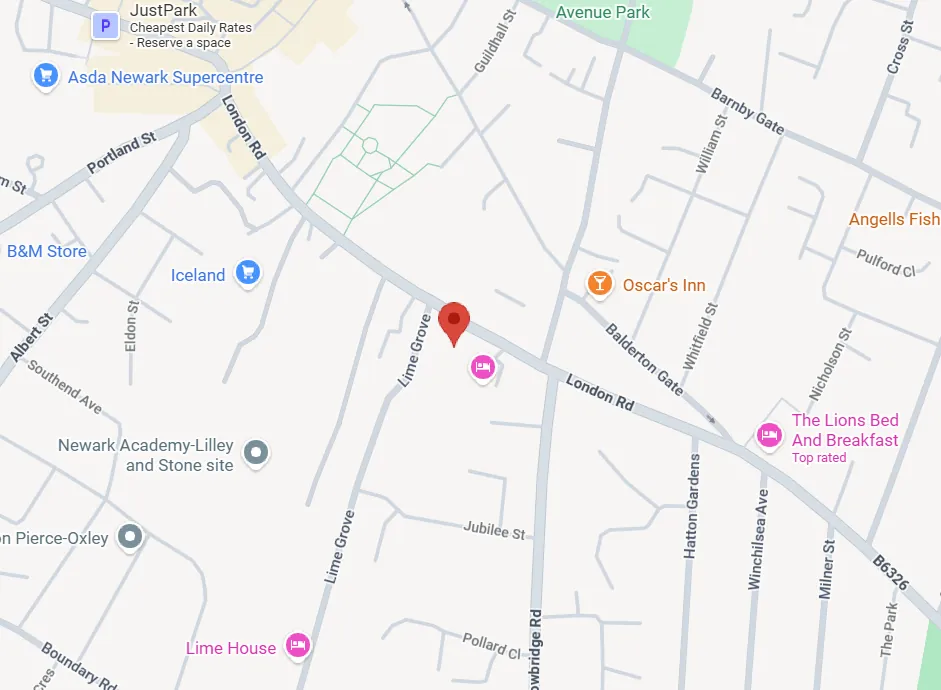
Find us on London Road.
36 London Road
Newark-on-Trent
Nottinghamshire NG24 1TF 01636 702241
Five minutes' walk from the town centre, close to the A1 and A46. Free on-site parking, plus pay and display at Deane Court Hotel (50p an hour, coins). Newark Castle and Newark Northgate stations are both under ten minutes away. Wheelchair accessible with downstairs surgeries and WC.